Time to read: 5 min
Intralogistics (planning and optimization)
- Optimization of the internal material flow

What is intralogistics?
Intralogistics or internal logistics comprises the flow of materials, information and goods within a factory. It is differentiated from external logistics, which involves the transport of goods outside a company. Intralogistics covers all processes and areas within the factory:
- Incoming goods, outgoing goods
- Transport systems
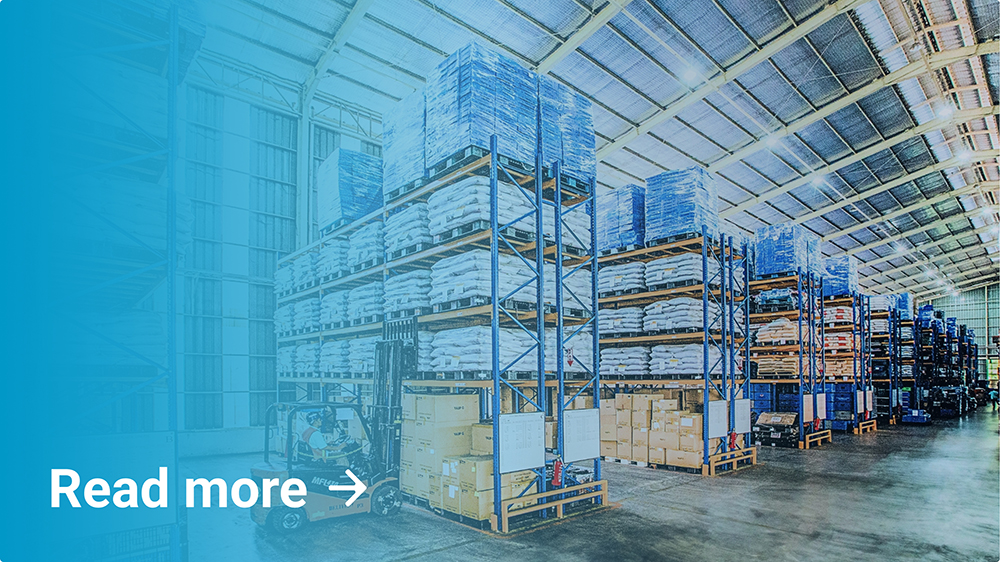
- Warehouse (storage systems, warehouse planning, warehouse management, shelves)
- Order picking or picking zones
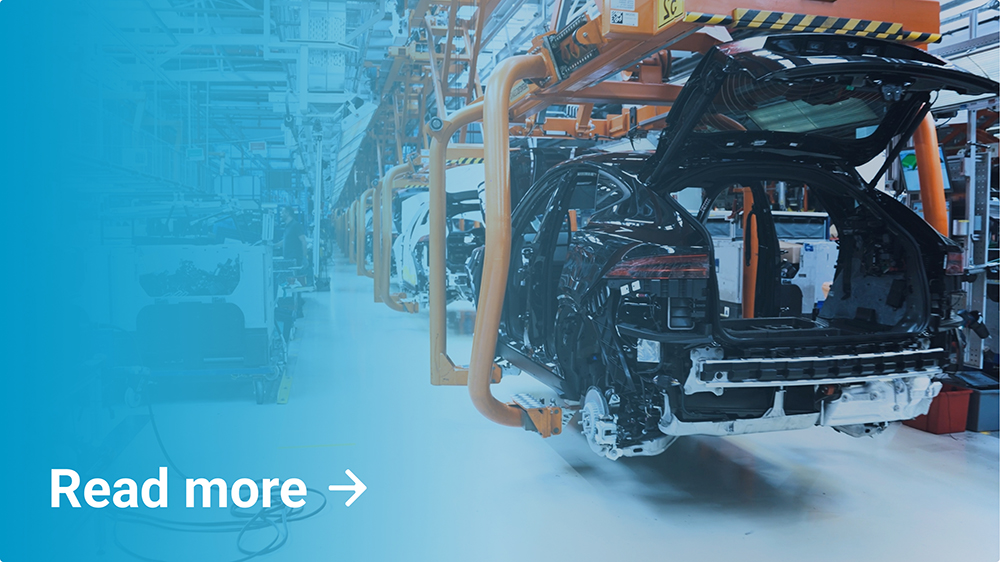
- Production, assembly
What is intralogistics planning?
In the context of intralogistics planning, internal processes should be optimally interconnected. All processes (material flow, storage, information flows and production processes) ideally run together perfectly.Why is it important to plan and optimize intralogistics?
Companies face many challenges. Smooth operations in intralogistics is one of them.
-
Bottlenecks
Increasing variant diversity often leads to bottlenecks in the different areas of a factory. Good intralogistics planning ensures that bottlenecks are reduced and material flows are optimized.
-
Lack of transparency
The increasing complexity of factory systems and flows of goods leads to unclear processes. A holistic integration is missing. Optimal logistics planning is now a time-consuming & complex task for the planner.
-
Time pressure
Internal processes (logistics planning) are not optimally coordinated. This results in waiting times and unnecessary breaks.
-
Rising costs
Elaborate warehouse technology, storage systems & conveyor technology lead to increasing costs.
Are you not yet planning your standard intralogistics processes? Unsure where to begin? We can help!
How are intalogistics processes planned and optimized?
The path to holistic and sustainable intralogistics is not far! Interconnected intralogistics and material flow planning can be achieved in just a few steps.
-
1. Record current status
record and bundle resources, processes, times, shift schedules, parts data, production data, Excel sheets
-
2. Layout planning
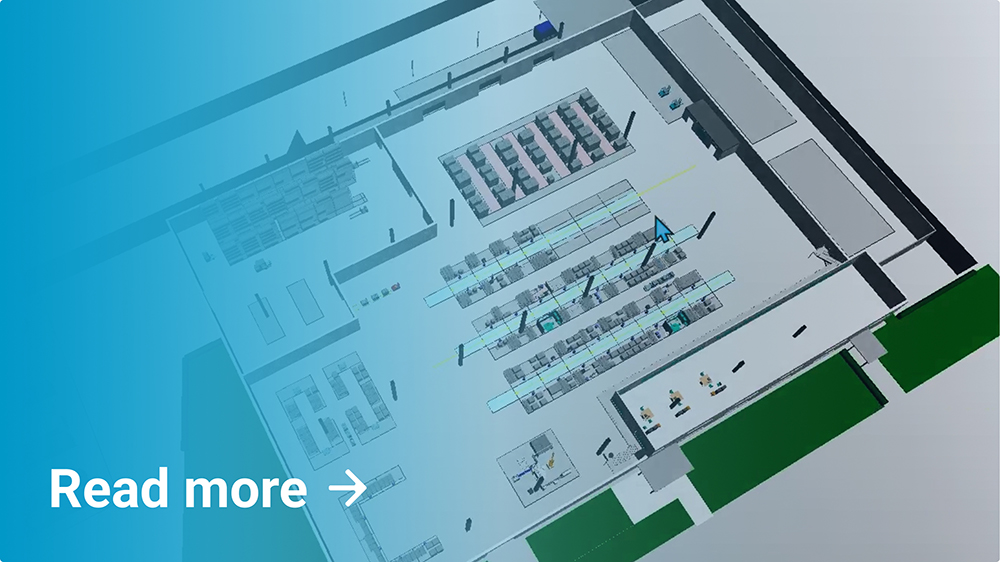
creation of a factory layout
-
3. Modeling of material flows
flow of goods is displayed
-
4. Resource requirements
The resource requirements are determined: Personnel, transport systems (driverless transport systems, tugger trains, forklifts, …), racking systems.
-
5. Cost calculations
In the last step, a cost and personnel evaluation can be determined.
In the following webinar, we will show you what intralogistics planning and optimization can look like.
Plan and optimize intralogistics: software helps!
-
Automated transportation planning
Evaluation of resource requirements and employee requirements (dynamic): tugger train requirements, employee requirements, tours per day, total distance and process times. -
Quick rescheduling
Rescheduling possible at the push of a button without having to change countless documents. -
3D simulation and visualization
Visualization puts an end to unpleasant surprises because an Excel formula was copied incorrectly. A 2D representation of the material flow by e.g. Sankey diagram and heatmap also helps to optimize the material flow. -
Line back calculation
Resource planning is based on the production program. -
Automatisierte Auswertung
Evaluation of resource requirements and employee requirements (dynamic): tugger train requirements, employee requirements, tours per day, total distance and process times.
»ipolog assembly planning software optimizes manual activities on the assembly line or at individual workstations by visualizing processes and »material supply directly in the factory layout. A... Das rasante Wachstum in der gesamten Logistik-Branche sowie immer stärkere Individualisierung von Produkten, Verkürzung der Lieferzeiten, hohe Verfügbarkeit und Qualität der Ware lassen auch die... Dynamic production planning and optimized production line balancing is a crucial success factor for your factory. However, it’s difficult to implement an ideal production cycle time with... In many manufacturing companies, final assembly is the stage in the production chain where the greatest value is created for the product. Even the best assemblies and vendor parts are of little...Assembly Planning Software
Warehouse Planning Software
Line Balancing Made Easy – Assembly Line Balancing Software
Simulation Software for Material Flow